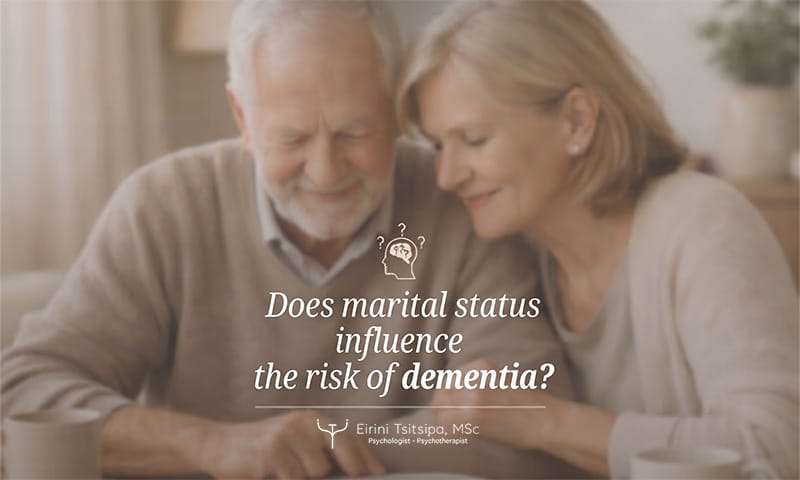
Research suggests that people who are married tend to have a lower risk of developing dementia compared with those who are widowed or have remained single throughout their lives. Widowed and lifelong single individuals are often underdiagnosed in routine clinical practice.
One explanation is that marital status can influence brain health through regular social interaction. Frequent contact with others helps to strengthen what is known as cognitive reserve, meaning that an individual has a greater ability to cope with neuropathological damage by using compensatory cognitive approaches from a physically more resilient brain to maintain cognitive ability and daily function.
Marriage often provides more opportunities for social connection and support and can also reduce certain unhealthy lifestyle habits. Studies show that, compared to single people, married individuals are less likely to smoke, drink excessive amounts of alcohol, or have poor dietary habits. They are also more likely to exercise regularly, attend preventive health check-ups, and follow medical advice, all factors that contribute to long-term brain health.
On the other hand, losing a spouse or going through a divorce can increase dementia risk, largely due to stress, which has a negative effect on brain function. Widowhood appears to be more stressful than divorce, which may partly explain the higher dementia risk observed among widowed individuals compared with those who are divorced.
In past generations, marriage was often considered essential. People with difficulties in flexibility of thought or communication and consequent smaller lifelong cognitive reserve (therefore more likely to develop dementia) may be less likely to marry. These same traits are also linked to a higher risk of dementia later in life. This suggests that single individuals from older generations may have been more likely to develop dementia, not because they were unmarried, but because of these underlying characteristics.
Today, however, remaining single is a far more common and socially accepted choice. Modern generations of single people are less likely to share the traits associated with low cognitive reserve. As a result, the increased risk reported in older studies appears to have diminished.
Ultimately, marital status alone is not the decisive factor. Dementia prevention is important for everyone. Lifelong learning, taking care of physical health, and maintaining meaningful social relationships are all investments in our brain’s resilience and long-term cognitive wellbeing.
References:
Fuller, T. D., & Tech, V. (2010). Relationship status, health, and health behavior: An examination of cohabiters and commuters. Sociological Perspectives, 53(2), 221–245.
Johansson, L., Guo, X., Hällström, T., et al. (2013). Common psychosocial stressors in middle-aged women related to longstanding distress and increased risk of Alzheimer’s disease: A 38-year longitudinal population study. BMJ Open, 3(9), e003142.
Joung, I. M., Stronks, K., van de Mheen, H., et al. (1995). Health behaviours explain part of the differences in self-reported health associated with partner/marital status in The Netherlands. Journal of Epidemiology & Community Health, 49(5), 482–488.
Kuiper, J. S., Zuidersma, M., Oude Voshaar, R. C., et al. (2015). Social relationships and risk of dementia: A systematic review and meta-analysis of longitudinal cohort studies. Ageing Research Reviews, 22, 39–57.
Manzoli, L., Villari, P., Pirone, G. M., et al. (2007). Marital status and mortality in the elderly: A systematic review and meta-analysis. Social Science & Medicine, 64(1), 77–94.
Rothman, S. M., & Mattson, M. P. (2010). Adverse stress, hippocampal networks, and Alzheimer’s disease. Neuromolecular Medicine, 12(1), 56–70.
Sommerlad, A., Ruegger, J., Singh-Manoux, A., Lewis, G., & Livingston, G. (2018). Marriage and risk of dementia: Systematic review and meta-analysis of observational studies. Journal of Neurology, Neurosurgery & Psychiatry, 89(3), 231–238.