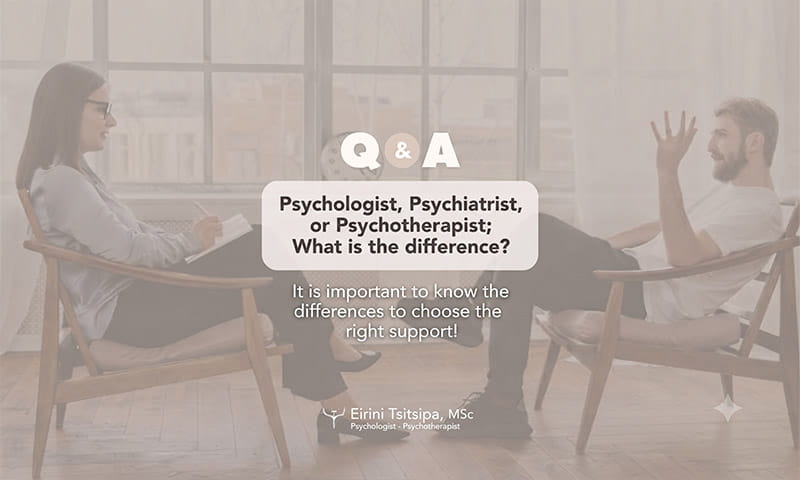
In the field of mental health, a range of professionals provide support and treatment to individuals experiencing psychological difficulties. Although these professionals often collaborate in order to offer comprehensive care, they differ significantly in terms of education, training, and scope of practice. Understanding these distinctions is essential for ensuring appropriate and effective support.
Psychologist:
A psychologist is a professional who has completed a university degree in Psychology and holds a license to practice. The role of the psychologist focuses on the assessment and understanding of human behaviour, cognition, and emotional processes.
Psychologists are trained to conduct psychological and neuropsychological assessments and to administer psychometric tests. They also provide psychotherapy, depending on their training. They do not prescribe medication.
Following their undergraduate studies, psychologists may pursue postgraduate education in specialised fields such as Clinical Psychology, Health Psychology,
Neuropsychology, or related disciplines. However, the completion of a postgraduate degree alone does not qualify a psychologist as a psychotherapist.
Psychiatrist / Child Psychiatrist:
A psychiatrist is a medical doctor who has completed medical training followed by specialisation in Psychiatry. A child psychiatrist has additional expertise in the mental health of children and adolescents.
Psychiatrists are responsible for the diagnosis of mental health conditions and are authorised to prescribe medication. Their work often focuses on the medical and biological aspects of mental health.
In order to provide psychotherapy, psychiatrists must undertake additional training in a recognised psychotherapeutic approach.

Psychotherapist:
A psychotherapist is a professional who has completed specialised training in a recognised psychotherapy approach, such as Cognitive Behavioural Therapy (CBT), psychodynamic therapy, systemic therapy, or Gestalt therapy.
Psychotherapists are typically psychologists or psychiatrists who have undergone additional training in psychotherapy. This training is usually long-term (approximately four years) and includes both theoretical education and supervised clinical practice.
Short-term seminars or workshops, while beneficial for professional development, are not sufficient to qualify an individual as a psychotherapist.
Mental Health Counsellor:
Mental health counsellors are trained through private educational programmes, the duration and structure of which may vary. They may come from a range of educational backgrounds, including but not limited to the social sciences.
Unlike psychologists, counsellors do not hold a state-issued license to practice psychology. However, they may provide supportive counselling services in private practice.
Final Note
It is important to consider the education, training, and certifications of any mental health professional. Appropriate and recognised training is a key factor in ensuring safe, ethical, and effective care.