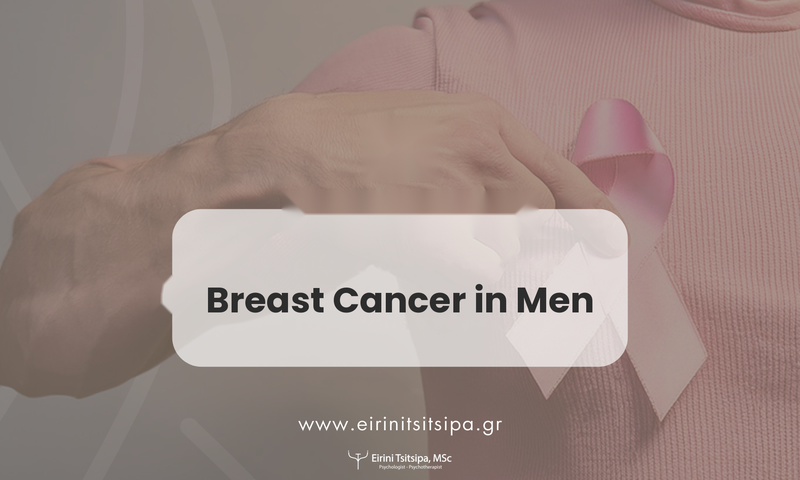
Breast cancer in men is rare, but real. It accounts for less than 1% of all breast cancer cases, yet the number of men receiving this diagnosis appears to be rising worldwide.
Research data on male breast cancer remains limited, and treatment is largely based on approaches developed for women. Some evidence suggests that, given the biological differences involved, breast cancer in men and in women may actually be two distinct diseases.
Risk factors include advancing age, obesity, family history, along with environmental and hormonal factors and genetic mutations.
Men with breast cancer face unique physical and emotional challenges. Yet a full understanding of these experiences , including the psychosocial impact and supportive care needs, has received far less attention.
How does it affect mental health?
A cancer diagnosis is often accompanied by intense anxiety and depression. Men may feel uncertain about the future, afraid for their survival, and struggle to come to terms with the illness especially in societies where the image of male “toughness” runs strong.
The available cancer treatments and their side effects can also affect men’s body image and self-esteem. Many patients struggle to cope with changes to their body, particularly when their sense of masculinity and their sex life are affected.
Breast cancer is usually associated with women, and men diagnosed with it often feel isolated and stigmatized. The strong public health emphasis on breast cancer prevention in women also seems to reinforce the perception that breast cancer is a “women’s disease.” As a result, men may feel embarrassed, feel as though they’re suffering from a “female” illness, and find it hard to talk openly about it which can, in turn, worsen their mental health.
This culture of silence around the topic can lead men to avoid confronting the illness altogether, and may delay them from seeking appropriate medical care.
The lack of understanding and awareness around male breast cancer can limit the healthcare and social support men receive. Some struggle to share their experience with friends or family, or feel that the support resources available are geared toward women.
What can we do?
Raising awareness about breast cancer in men can help reduce stigma and isolation. Talking openly about male breast cancer can help educate the public and make it easier for men to seek help.
Research also shows that psychotherapeutic interventions , whether individual or group-based, help patients manage symptoms and improve their quality of life. That said, more research focused specifically on men is still needed.
Breast cancer in men isn’t just a physical challenge — it’s a psychological one too. Accurate information, access to psychological support, and building a genuine support network can help patients face the difficulties that come with this illness and improve their quality of life.
Recognising symptoms early and being aware of risk factors are key to early diagnosis.
References
Abboah-Offei, M., Bayuo, J., Salifu, Y., Afolabi, O., & Akudjedu, T. N. (2024). Experiences and perceptions of men following breast cancer diagnosis: a mixed method systematic review. BMC Cancer, 24(1), 179.
Brain, K., Williams, B., Iredale, R., France, L., & Gray, J. (2006). Psychological distress in men with breast cancer. Journal of Clinical Oncology, 24(1), 95–101.
Deldar, R., Sayyed, A. A., Towfighi, P., Aminpour, N., Sogunro, O., Son, J. D., … & Song, D. H. (2022). Postmastectomy reconstruction in male breast cancer. The Breast Journal, 2022(1), 5482261.
Dozier, R. (2005). Beards, breasts, and bodies: Doing sex in a gendered world. Gender & Society, 19(3), 297–316.
Fox, S., Speirs, V., & Shaaban, A. M. (2022). Male breast cancer: an update. Virchows Archiv, 480(1), 85–93.
Kowalski, C., Steffen, P., Ernstmann, N., Wuerstlein, R., Harbeck, N., & Pfaff, H. (2012). Health-related quality of life in male breast cancer patients. Breast Cancer Research and Treatment, 133, 753–757.
Ye, M., Qiu, L., Jin, Y., & Huang, Y. (2024). Stakeholders’ experiences and perceptions of male breast cancer: A qualitative evidence synthesis. The Breast, 103694.